Beginner's Guide #2: What Randomness Is, and How to Set Your Own Limits
# Beginner's Guide #2: What Randomness Is, and How to Set Your Own Limits
> Byline: RND Lab · 随机数字实验室 | Random Number Lab > Positioning: Random Number Lab · historical-data research. Source: draw history officially published by Singapore Pools. RND Lab is not the official source. Game rules are as published by the official Singapore source. > 🔞 21+ only
---
1. The conclusion first: randomness in three sentences
If you read only one section, read this one:
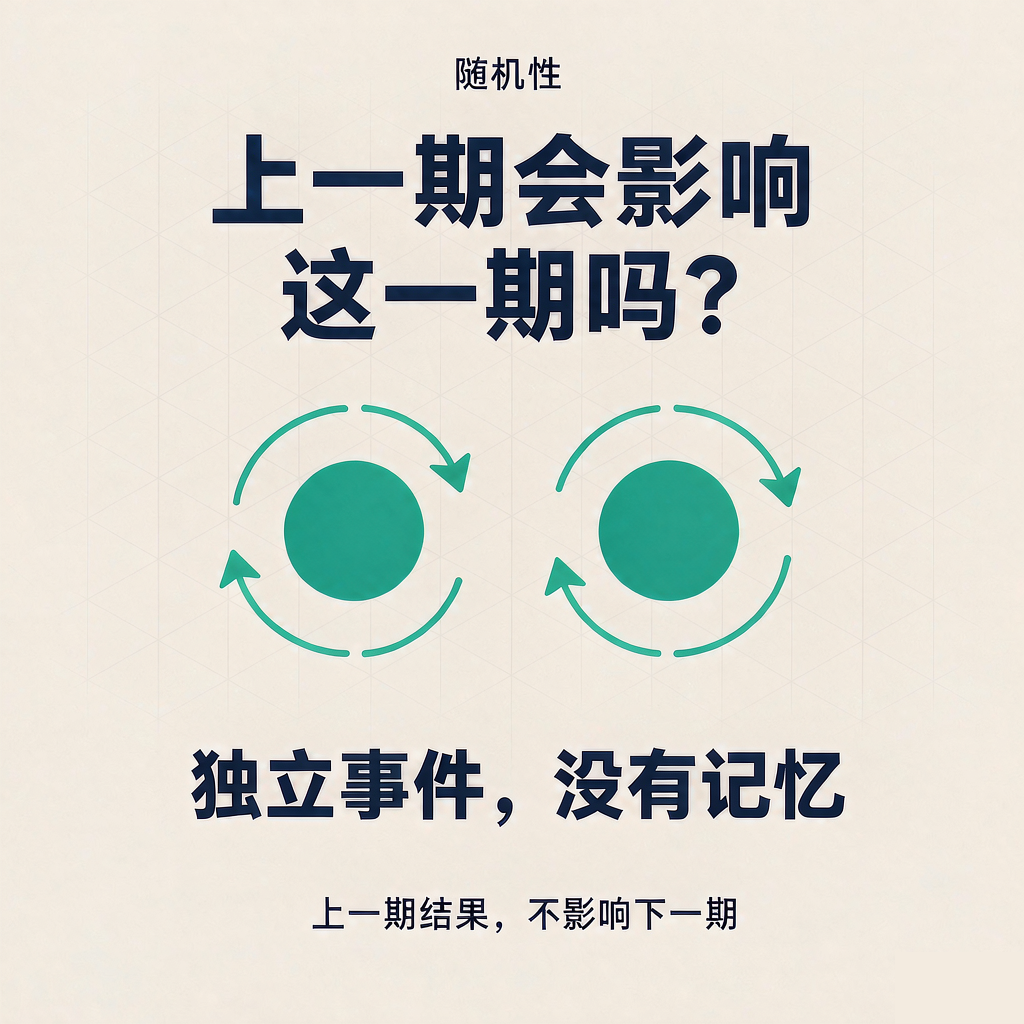
1. Every draw is an independent event. What came out last draw does not affect what comes out next. 2. Independent events have no memory. A number that has not appeared for a long time is not any more likely to appear because of it. 3. Probability describes long-run frequency, not short-term compensation. Anything can happen in the short run; history does not pay back what it "owes".
Those three sentences are three ways of saying one thing: outcomes are generated, not balanced.
One more thing this page gives you directly: RND Lab structures the draw history officially published by Singapore Pools into something queryable, with AI-assisted analysis summaries — distributions, range structure, time-window comparisons — served in a readable form. Numbers you have logged are checked automatically after each draw against the published results. Treat it first as a tool for understanding data; that alone is worth more than anything else here.
2. What randomness is: the coin-toss intuition test
Start with the most neutral example there is — a coin.
A fair coin lands heads or tails at 1/2 each. (This is an ideal fair-coin model — a mathematical abstraction, not a description of any draw equipment.) After five heads in a row, what is the probability of heads on the sixth toss?
Still 1/2.
Not smaller, not larger. In this model the coin does not know what it just did — successive tosses are independent, and independent events have no memory, so the sixth toss does not shift because five heads landed first. The feeling that "tails is owed now" mistakes an independent event with no memory for a process that balances itself out.
One point here is worth pulling out separately:
- Before you start: the probability of "six heads in a row" is (1/2)⁶ = 1/64 — small.
- After five heads have already landed: the probability of heads on the sixth toss is back to 1/2.
Both figures are correct. The only difference is where in time you are standing when you calculate. Randomness does not deny that six heads in a row is rare; what it denies is that heads five times makes tails more likely next.
3. Why the human brain is built to find patterns
Faced with a string of random digits, we struggle to accept "no pattern". That is not foolishness; it is how the brain works by default:
- The pattern illusion: "seeing" a shape or rhythm in a purely random sequence and taking it to be real;
- The clustering illusion: randomness clusters on its own — runs and dry spells are normal — yet we read them as "signals";
- The small-sample illusion: small samples are naturally uneven, and small samples are exactly what we tend to stare at.
Here is an example you can check yourself:
Toss a coin 10 times and there are 2¹⁰ = 1,024 possible sequences in total. Only 2 of them alternate strictly (HTHT… or THTH…). The other 1,022 all look "uneven" in one way or another.
In other words: in a random sequence, seeing unevenness is close to guaranteed. It carries no extra information. The sense of pattern comes from your eyes, not from the data.
There is a reason the brain works this way: in the natural world, spotting patterns in noise kept people alive. The cost is that when we point that instinct at genuinely random draw data, it keeps reporting patterns that are not there.
4. Independent events and "no memory"
Translating the last section into a definition: independent events are events where one outcome does not change the probability of another.
Three checks you can apply directly:
1. Last draw does not affect the next one. What came out last time leaves the next draw's probabilities untouched. 2. A number absent for a long time keeps its probability. It is not any more likely to appear just because the gap has grown. 3. A number that just appeared keeps its probability too. It is not higher because it is "on a run".
Put it in 4D terms:
> Under the rules as published by the official source, a 4D number is a four-digit string from 0000 to 9999 — 10,000 combinations in total. For any specific four-digit number, the combinatorial probability (the probability derived from counting combinations) of it being the top prize in a given draw is 1 in 10,000 — regardless of how many draws have passed since it last appeared.
The same holds for TOTO:
> Under the rules as published by the official source, TOTO asks you to choose 6 numbers out of 49, giving C(49,6) = 13,983,816 combinations. That, too, is a count — it does not move with what history has produced.
Both rule premises above are taken from the game rules published by Singapore Pools; RND Lab is not the official source.
5. How to read historical data properly: it describes the past, not the future
If randomness cannot be seen through, what is left in historical data? The answer: description and verification.
Questions it can answer:
- Whether the frequency of numbers is broadly even;
- How numbers spread across ranges;
- How one time window's distribution compares with another's.
The question it cannot answer: what comes next.
There are only three rules for reading it well:
1. Fix the question first. Are you talking about the top prize or any prize tier? The latter depends on the tier structure and on how many numbers a draw produces — as published by the official source. 2. Look at distributions, not "trends". Describing the distribution of what has happened is one thing; joining the dots and extending the line is another. 3. Use a window long enough. Short windows are uneven by construction — the 1,024 sequences in section 3 already show that. Only a long window lets you talk about approaching long-run frequency.
One line says it: historical data is a photograph of the past, not a script for the future.
What the AI-assisted analysis summaries do here is plain enough: they organise that photograph — distributions over a long window, range structure, time-window comparisons — and lay it out in front of you. After the draw, numbers you have logged are checked automatically against the results published by Singapore Pools. What you save is the time spent flipping through records and counting by hand; what you get is material you can verify yourself.
6. Setting your own limits in three steps: set the line while you are calm
With randomness understood, the case for limits is short:
You cannot control the outcome. You fully control what you put in.
Since no number is "owed", the only variables worth your attention are on your own side of the table. Three steps are enough:
Step 1 · Set a budget ceiling
- Carve out an amount from income you can freely dispose of: if it were fully used, your life arrangements would not need to change at all.
- When the amount is used up, the period ends. No extension because it was "almost".
- Do not raise the ceiling after a disappointing result. The ceiling is set when you are calm, not revised while you are emotional.
Step 2 · Set a time reminder and a cooling-off period
- Put a time reminder on "looking at data"; when it goes off, step away.
- When results run against you, or when feelings run high, give yourself a cooling-off period and come back after it.
- Treat "no decision this time" as a perfectly normal option.
Step 3 · Review periodically, and pause when needed
- Look back at your own log on a fixed cycle: time spent, amount, and what state you were in.
- Is the current pace still right? If not, adjust it downwards, not upwards.
- When you need to, pause for a while. Pausing is not a failure; it is part of how this method works.
> These three steps are general self-management practices and depend on no particular feature. You can write them down on paper and use your phone's alarm as a reminder, then follow the limits and stopping points you set in advance.
> If you need help, please refer to the self-exclusion and support channels published by the official Singapore source (details as published by the official source). This page lists no organisation names, hotline numbers or links, to avoid citing information that has not completed verification.
> Per the official Singapore source, the minimum age to participate is 21; details are as published by the official source. This page is written for readers aged 21 and above.
7. Three actions for a beginner
1. Use the tools to look at the data once. Spend a little time on the three views — number distribution, range structure, time-window comparison — until you know what randomness actually looks like. Everything else is built on that. 2. Write your line down before you look at the data. Budget ceiling, time reminder, cooling-off period — all three written while you are still calm, then followed literally. 3. Let the system do the checking. Log the numbers you follow; they are checked automatically after each draw. Use the time you save to review, not to raise the ceiling you set.
8. Recap
- Randomness = independent events (independent events have no memory) + long-run frequency is not short-term compensation.
- The coin already showed it: after five heads, the sixth toss is still 1/2. "Tails is owed" mistakes an independent event with no memory for a self-balancing one.
- Pattern-hunting is a human instinct, not a property of the data: 1,022 of 1,024 sequences look uneven.
- Historical data is for description and verification: a photograph of the past, not a script for the future.
- The only variables you control are on your side — time, attention, and your spending ceiling — so set the line first.
- Three steps: budget ceiling → time reminder and cooling-off period → periodic review and pause.
---
> 历史数据仅为描述性统计,每期开奖相互独立,不代表未来结果,不构成任何预测或投注建议。🔞 仅限 21+,请理性看待随机性。 > Historical data is descriptive only. Each draw is independent; past results do not predict the future. Not betting advice. 🔞 21+ only. Play responsibly.
---